By StripeFit Editorial TeamFirst published Updated
Hydration vest vs belt is really a question about how you want weight to sit on your body. A belt keeps your shoulders free and works well for road runs, shorter long runs, and simple phone-plus-bottle carry. A vest spreads weight across the torso and usually works better when you need more fluid, more pockets, trail gear, or stable storage for long routes.
The wrong choice becomes obvious fast. A belt that bounces can make every mile feel annoying. A vest that traps heat or rubs the neck can feel excessive on short road runs. The right choice should match the route, not the image of the runner you think you are supposed to be.
Disclosure: This page contains affiliate links. If you buy through qualifying links, StripeFit may earn a commission at no extra cost to you.
n
Evidence and current product check
n
Current Hydration Vest And Belt Options
n
These are current product candidates for the vest-versus-belt decision. The selection is based on product class and Creator API catalog validation, not firsthand testing, lab testing, or a claim that one option is best for every runner. Prices, seller, variant, Buy Box status, and availability can change.
n
Hydration Vests
n
- Osprey Duro LT Men's Running Hydration Vest: A vest candidate for front storage, bottle access, and a larger carry load. Creator validation on July 17, 2026 confirmed this candidate in the relevant product catalog search. Confirm the current listing before ordering. Check current listing.
- CamelBak Dart Run Hydration Vest: A vest candidate for runners comparing a reservoir-style carry option. Creator validation on July 17, 2026 confirmed this candidate in the relevant product catalog search. Confirm the current listing before ordering. Check current listing.
n
Hydration Belts
n
- Nathan Peak Hydration Waist Pack: A belt candidate for compact waist carry, phone storage, and shorter supported routes. Creator validation on July 17, 2026 recorded a Buy Box result for this candidate. Confirm the current listing before ordering. Check current listing.
- Fitletic Hydra 16 Hydration Belt: A belt candidate for runners comparing compact bottle and waist-storage formats. Creator validation on July 17, 2026 recorded a Buy Box result for this candidate. Confirm the current listing before ordering. Check current listing.
n
How To Compare The Formats
n
Use route length, water access, fluid capacity, bottle or reservoir access, phone and fuel storage, bounce, heat, and return terms as the comparison variables. A belt is often the simpler starting point when the route is supported and the carry load is small. A vest becomes more useful when storage, fluid capacity, or route uncertainty is the limiting factor.
n
Related: Compare best hydration vests for trail running and best hydration belts for half-marathon training before choosing a carry format.
nn
nn
n
Quick Answer
Choose a hydration belt for road running, half-marathon training, short-to-medium long runs, and simple carry. Choose a hydration vest for trail runs, hotter routes, longer distances, larger phones, extra layers, soft flasks, and routes where water access is uncertain. If both could work, start with the belt for simplicity and move to a vest only when capacity or stability becomes the limiting factor.
| Runner Need | Start With | Why It Works |
|---|---|---|
| Road half-marathon training | Hydration belt | Simple bottle access and phone storage without extra upper-body coverage. |
| Trail route or long unsupported run | Hydration vest | More storage, better weight spread, and easier access to supplies. |
| Hot weather short run | Handheld bottle or small belt | Less fabric and less trapped heat than a vest. |
| Phone plus flask carry | Light running vest | Better if a heavy phone makes belts bounce. |
| Race with aid stations | Belt or waist pack | Often enough for gels, phone, keys, and small backup fluid. |
Audited Product Starting Points
These exact Amazon products came from the current product feed and passed the StripeFit relevance audit for this hydration and race-day gear cluster. Confirm size, flavor, capacity, price, and return policy before buying.
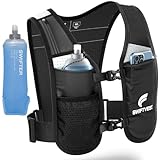
SWIFTVEST Running Vest
A current vest candidate when a runner wants front storage, phone carry, bottle access, and reflective details.

MOKURA Hydration Running Vest
A relevant vest pick for runners who want a lightweight pack with a soft flask and phone storage.

AiRunTech Hydration Running Belt
A practical first check for runners who want belt storage, a bottle, and phone carry without moving to a vest.
How To Choose
Start with distance and route. If your run is under an hour and passes reliable water stops, a handheld or small belt may be enough. If your run stretches longer, goes onto trails, or includes heat, hills, or unpredictable water access, a vest becomes more useful. Vests also help when you carry a larger phone, keys, gels, a light layer, and safety items at the same time.
Then think about temperature and body feel. Belts usually feel cooler because they cover less of the torso. Vests usually feel more stable because the load is spread across the chest and back. Some runners dislike shoulder straps. Others dislike waist pressure. The best system is the one you forget about after the first mile.
Fit, Carry, And Comfort Checks
For a vest, fill the bottle or bladder before testing. Tighten the chest straps enough to reduce bounce without restricting breathing. Check neck edges, arm swing, phone pocket access, and whether the bottle can be removed while moving. For a belt, test it with the bottle full and phone loaded. The belt should not rotate, climb, or dig in.
Common Mistakes
The first mistake is buying a vest for every run. A vest can be excellent, but it is not automatically better. On short road runs it can feel hot, bulky, or unnecessary. The extra storage can also encourage carrying too much.
The second mistake is forcing a belt to do a vest job. If you need multiple bottles, gels, keys, a phone, a light shell, and a safety item, a belt may bounce or sag. At that point, a vest can feel calmer and more efficient.
Training And Race-Day Use
Use training runs to decide race-day carry. If a vest feels comfortable on a ten-mile run and you will race in warm weather, keep practicing with it. If aid stations are frequent and you only need gels and phone storage, a belt can be less distracting.
For trail runs, a vest is usually the stronger starting point because trail routes are less predictable. For road half-marathon training, a belt is often enough. For marathon training, many runners use both: a belt for shorter long runs and a vest for longer or hotter runs.
Best Buying Path
Start with a hydration belt if you are mostly running roads and building toward a half marathon. Compare SWIFTVEST or MOKURA if you need vest-style storage, phone access, and more stable torso carry. If you want compact carry, read the waist-pack guide before choosing.
Internal Next Steps
Read best hydration belts for half-marathon training for belt picks. Use best running water bottles for long runs if you want a simpler handheld option. If you are building the full beginner kit, see beginner running gear checklist.
Evidence and related guidance
Evidence We Used
- The current StripeFit revenue action queue recorded 29 GSC impressions and 0 affiliate clicks for this page. That makes the buyer question “hydration vest vs belt running” a useful target without overstating demand.
- On July 16, 2026, Creator catalog searches validated live Buy Box examples for hydration belts: AiRunTech B07QDW8T87 is already on this page, and the current belt result also included B0C4L4TQQS. Vest results included SWIFTVEST B0CGPYLG6H, which exists on this page, along with additional trail vest examples.
- The decision criteria used here are water access and capacity, storage, bounce and stability, route and terrain, and the race aid-station plan. These are shopping variables for comparing carry options, not medical or performance claims.
Related: For a different carry format, compare best handheld bottles for marathon training.
FAQ
Is a hydration vest overkill for road running?
Sometimes. For short road runs, a handheld or belt is usually simpler. A vest makes more sense when distance, heat, storage, or water access justify the extra fabric and capacity.
Do hydration belts bounce?
Some do, especially when overloaded or worn too loosely. A belt should be tested full, not empty. If it keeps bouncing, a vest may spread the weight better.
Can you wear a hydration vest in a half marathon?
Usually yes if race rules allow it, but check the event first. Many half-marathon runners use belts or aid stations instead because they need less carry capacity.
Fuel Storage Changes The Carry Choice
Vest vs belt is not only about water. Longer races also need space for fuel, wrappers, phone, keys, and backup products.
| Next decision | Best StripeFit guide | Why it matters |
|---|---|---|
| Marathon gel count | How many gels for a marathon | Use before choosing a vest or belt so you know how much fuel needs storage. |
| Gel vs chew storage | Running gels vs chews | Chews, waffles, and gels use pockets differently, especially late in a race. |
| First energy gel guide | Best energy gels for runners | Good next step if the carry problem starts with uncertainty about the fuel itself. |
Before you buy: quick price + alternatives check
Use these links to compare current options and avoid overpaying.
StripeFit may earn a commission from some links. This never affects what we recommend.Get weekly gear picks that actually matter
One email a week. Best shoes, watches, and deals. No fluff.
By subscribing, you agree to receive emails from StripeFit. Unsubscribe anytime.Hydration and fuel buying paths
Match the setup to run length, weather, carry needs, and stomach tolerance before buying bottles, belts, vests, gels, or electrolytes.